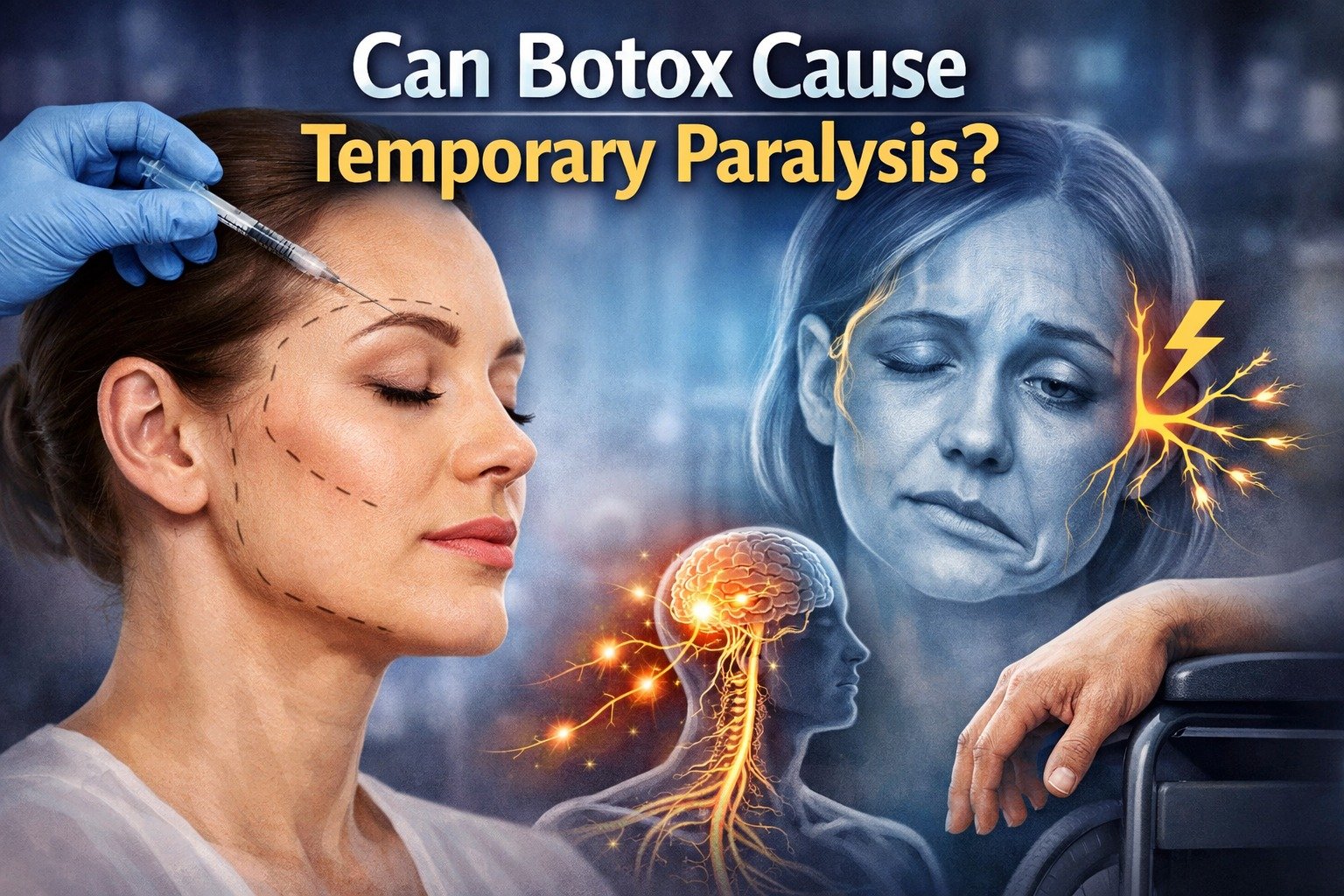
Can Botox cause temporary paralysis?

Botox is a widely used cosmetic and medical injection in the world. However popular, there are still individuals who are scared of the way it works within the body. The first issue that is faced is whether Botox causes temporary paralysis. Learning the science of the treatment would help separate myths and medical facts.
Learning About How Botox Works in the Body
A product that is considered to be a purified form of botulinum toxin is Botox. It prevents the transmission of nerve signals that trigger the contraction of muscles. If these signals are diminished, the muscle relaxes, and this softens wrinkles or decreases unwanted muscle activity. It is this type of relaxation of the muscles that makes Botox effective in cosmetic lines, migraines, excessive sweating, and muscle spasms. One should realize that Botox is not transmitted randomly in the case of proper use. This controlled action defines Botox muscle relaxation and makes the treatment predictable.
Does Botox Actually Cause Temporary Paralysis?
The medical meaning of paralysis is not possible with Botox Injections . Paralysis is a total inability to move the muscles. Botox just paralyses or relaxes special muscles momentarily. It is a localized reversible effect. There are uncommon cases where the muscle treated will feel weaker than it was supposed to be. This may be interpreted as some form of temporary paralysis, yet it is a normal pharmacological reaction. The nerve endings regenerate slowly and re-establish muscle movement with time.
Why Can Muscular Weakness Occur?
Momentary weakness may occur when Botox has leaked a little outside the target muscle. This is more probable when the doses are too high or the location of the injection is wrong. The effect is also temporary, and it normally goes away in weeks.
That is why professional technique is so important. Anatomical knowledge and proper dosage minimize the chances of undesirable effects. Under proper execution, Botox side effects are mild and temporary.
Areas of Weakness are More Noticeable
There are areas of the face that are sensitive to Botox. Even little changes can be experienced around the eyes or forehead. Such as drooping eyelids or heaviness may be experienced in case the surrounding muscles are affected. These effects last for a short period, and they normally subside as the Botox expires. They do not show nerve damage or irreversible damage. Knowledge about this contributes to the reduction of anxiety within the initial weeks of treatment.
What is the Duration of the Effects of Botox?
The duration of Botox effects is 3 to 4 months. Gradually, nerve impulses reemerge, and muscular movement reappears. The gradual process is such that the changes dissipate naturally instead of being stifled. The weakness of the muscles subsides temporarily. This safety is one of the essential safety characteristics of Botox injection safety, and the reasons why it is approved for use.
Medical vs Cosmetic Use Safety
The use of Botox in medicine and cosmetics dates back decades. Medicine Sometimes, much higher doses are used, but under strict supervision. Not even at that time do serious complications occur.
In cosmetic therapy, the dosage used is much lower. This also minimizes the chances of general body muscle weakness. Botox is one of the safest injectable therapies in the contemporary world when the guidelines are followed.
Myths About Botox and Nerve Damage
The popular myth is that Botox kills nerves and makes them permanent. The fact is that Botox influences the chemical messenger between nerves and muscles, but not nerves. The nerve does not degenerate but just develops new interconnections.
That is the reason why Botox effects are momentary and why muscles restore their full functionality. The long-term safety of non-surgical anti-aging procedures, such as Botox, is proven by scientific research.
Who Should Be More Cautious
Some ought to be cautious about risks before treatment. Individuals who have neuromuscular diseases, acute infections, or certain allergies can not be considered good candidates.
The risks can be identified at an early stage with the help of a detailed medical history. Screening is important to reduce any possibility of complications and achieve positive results
How to Minimise the Risk of Unwanted Effects?
The most significant consideration is the selection of a professional injector like Dr. Maryam Malik at Royal Cosmetic Surgery Islamabad. Practice is the guarantee of correct positioning and correct dosage. Aftercare guidelines also contribute to it, including avoiding stress on the areas of treatment and avoiding demanding physical activity in the near future. When patients inquire about the possibility of Botox causing paralysis, we tell them that knowledge and learning have the most significant impact on safety and satisfaction.
Final Words!
There is no real paralysis caused by Botox. It leads to temporary relaxation of muscles, which is controlled and disappears with time. Localized weakness may happen in isolated situations, which is reversible and can be handled. When used properly, medically assessed, with the proper expectations, Botox is one of the items that can be trusted to be used as a cosmetic or even as a treatment. The bottom line is that to make informed decisions, one should understand how it works.